Hexagonal Color Tile Pattern: The Mosaic Sea of Modern Design
Understanding the Allure of the Mosaic Sea
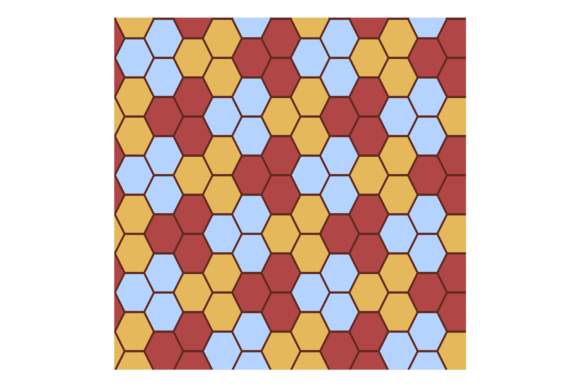
When you first encounter the Hexagonal Color Tile Pattern. Mosaic Sea, it’s less like looking at a font and more like discovering a new material for your creative toolkit. This isn't just a collection of letters; it is a fully realized seamless ornament system. Visually, it functions as a dynamic vector illustration that breaks the grid. The defining characteristic is, of course, the hexagon. Unlike the rigid square grid of traditional pixels, the hexagonal tile offers a more organic, honeycomb-like structure. In the "Mosaic Sea" variation, the color palette is fluid, mimicking the shifting hues of water and light, creating a depth that flat colors simply cannot achieve.
The personality of this design asset is bold, structural, and undeniably modern. It bridges the gap between geometric art and modern typography. Because the pattern relies on a tessellated structure, it feels engineered and precise, yet the color shifting gives it a hand-crafted, artisanal quality. It’s the kind of visual language that speaks to tech startups, architectural firms, and high-end lifestyle brands simultaneously. It avoids the rigidity of a standard sans serif font while lacking the historical baggage of a traditional serif font. Instead, it occupies a unique space as a creative font that functions as a graphic element in its own right.
Strategic Applications: Where the Pattern Shines
For designers, entrepreneurs, and marketers, the challenge with any premium font is knowing where it fits best. The Hexagonal Color Tile Pattern excels in environments where visual hierarchy needs to be established quickly and memorably. It is a natural fit for logo design, particularly for brands in the tech, gaming, or sustainable energy sectors. The interconnected nature of hexagons implies networks, connectivity, and nature (think honeycombs or basalt columns), making it a powerful subliminal tool for brand identity.
However, its utility extends far beyond a static logo. Consider its impact in packaging design. A box wrapped in the Mosaic Sea pattern doesn't just sit on a shelf; it demands attention through texture and color complexity. It turns a standard product into a design asset. For publishers and bloggers, this pattern serves as an exceptional hero image or background texture for editorial design. It adds a layer of sophistication to magazine covers or website headers without overwhelming the content, provided it is used with the right opacity or cropping.
Furthermore, in the realm of social media graphics, standing out is the only metric that matters. The Hexagonal Color Tile Pattern creates a rhythmic visual noise that stops the scroll. Content creators and small business owners can use this vector illustration style to create cohesive backgrounds for Instagram stories, YouTube thumbnails, or LinkedIn banners. It provides a consistent "studio" look that elevates amateur content to professional standards.
Technical Considerations and Design Implementation
Adopting a display font or pattern of this magnitude requires a shift in how you approach web design and print layout. One of the primary strengths of the Hexagonal Color Tile Pattern is its scalability. As a vector illustration, it maintains its crispness whether you are printing it on a billboard or rendering it as a tiny favicon. This resolution independence is crucial for maintaining professionalism across all touchpoints.
When it comes to readability, this is where the "display" nature of the asset comes into play. You would rarely set a body of text using a full mosaic pattern. Instead, think of it as a headline or accent tool. It influences visual hierarchy by anchoring the page. For example, a header rendered in the Mosaic Sea style draws the eye immediately, allowing you to pair it with a cleaner, more legible body font—perhaps a geometric sans serif that complements the hexagonal angles without competing for attention.
Pairing and Integration
Successful font pairing is about contrast and harmony. Because the Hexagonal Color Tile Pattern is visually dense and colorful, it requires a partner that is subdued and structured. Avoid pairing it with other complex script fonts or handwritten fonts, as this will create visual chaos. Instead, look to clean, neutral typefaces. A sans serif like Montserrat or a humanist sans like Gill Sans can provide the breathing room needed to let the mosaic pattern shine.
For crafters and those involved in physical goods, the pattern works beautifully in sublimation printing. The seamless nature of the ornament means it can be tiled infinitely on fabrics, wallpapers, or stationery without visible breaks. This is a massive advantage for hobbyists looking to create professional-grade merchandise.
Practical Guidance for Commercial Use
Before integrating this asset into a client project, a few practical checks are necessary. First, always review the licensing. Ensure the commercial font or pattern license covers the specific medium you are using, whether digital (web/app) or physical (merchandise). Most premium font licenses are tiered, so verify if the "Mosaic Sea" vector files are cleared for print-on-demand services if you are an entrepreneur.
Next, evaluate the file formats. You mentioned EPS, JPG. For web design, you will likely need to convert the EPS to SVG or optimized PNGs to ensure fast load times. The JPG is useful for mockups or social media, but for logo design, you must stick to the vector formats to ensure the edges remain sharp at any size.
Finally, test the pattern in grayscale. A strong design relies on more than just color; it relies on value. The Hexagonal Color Tile Pattern should maintain its structural integrity and appeal even when stripped of its "Mosaic Sea" colors, ensuring it works in fax documents, stamps, or monochrome printing scenarios.
The Verdict on Hexagonal Aesthetics
In a digital landscape crowded with rounded corners and soft gradients, the Hexagonal Color Tile Pattern. Mosaic Sea offers a refreshing shift toward structure and complexity. It is a design asset that commands respect and attention. Whether you are a marketer looking to revamp a campaign or a designer seeking a unique texture for a client's brand identity, this pattern provides the versatility and visual punch required to make a lasting impression. It transforms the ordinary into a geometric masterpiece.